
Saree is not just a piece of clothing—it is a symbol of tradition, elegance, and timeless beauty. Worn by Indian women for centuries, sarees reflect the rich cultural heritage, craftsmanship, and diversity of India. From luxurious silk weaves to lightweight cotton drapes, each saree tells a unique story.
In this blog, we will explore the different types of sarees based on fabric, weaving styles, regions, and occasions—helping you choose the perfect saree for every moment.
Table of Contents
types of sarees: Silk Sarees – The Epitome of Elegance
Silk sarees are the most luxurious and traditional sarees in India. Known for their rich texture, glossy finish, and intricate designs, they are a must-have for weddings and grand celebrations.
Popular Types of Silk Sarees:
- Kanchipuram Silk Sarees: Originating from Tamil Nadu, these are famous for their heavy silk and rich zari borders.
- Banarasi Silk Sarees: Known for intricate gold and silver brocade work, ideal for bridal wear.
- Mysore Silk Sarees: Lightweight and elegant with minimalistic designs.
- Paithani Sarees: Known for peacock motifs and vibrant color combinations.
Kanchipuram Silk Sarees – History, Types, Designs & Buying Guide
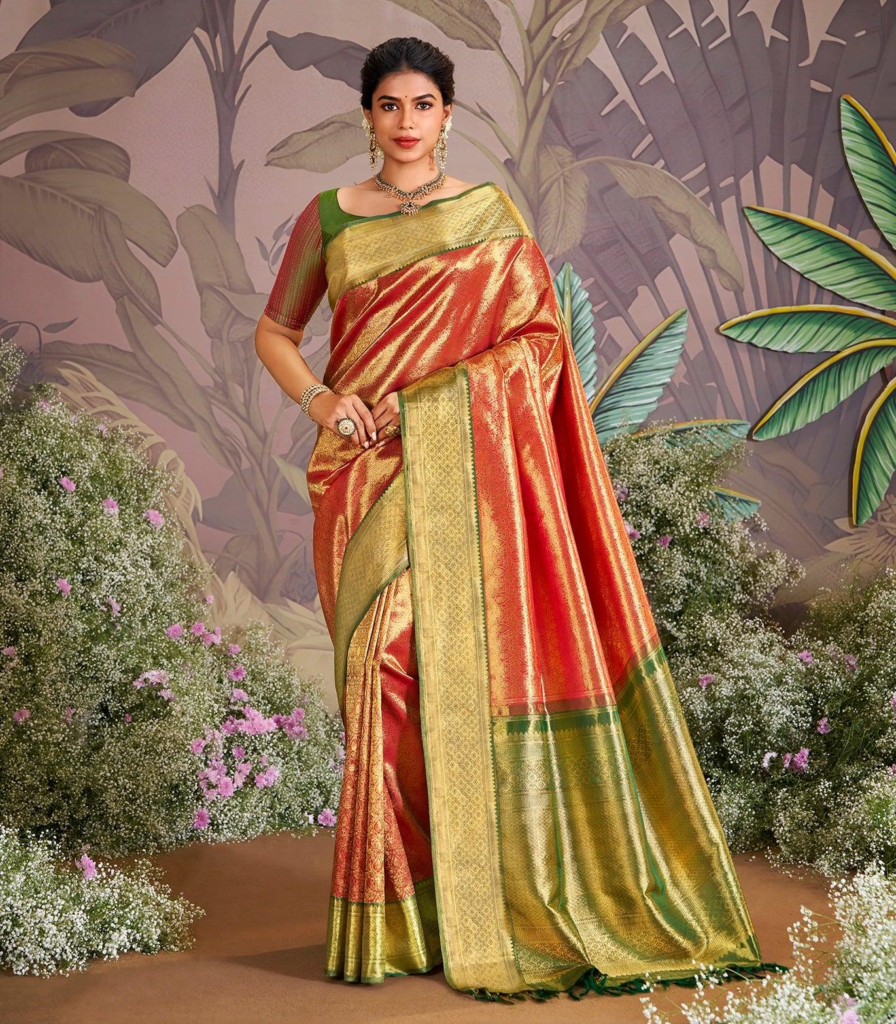
Kanchipuram silk sarees, also known as Kanjivaram sarees, are among the finest and most luxurious sarees in India. Renowned for their rich silk, vibrant colors, and intricate zari work, these sarees are a symbol of tradition, elegance, and timeless beauty.
Originating from the temple town of Kanchipuram, these sarees are a must-have in every Indian woman’s wardrobe—especially for weddings and festive occasions.
The legacy of Kanchipuram silk sarees dates back over 400 years. Skilled weavers from Andhra Pradesh migrated to Kanchipuram and began weaving silk sarees inspired by temple architecture, sculptures, and nature.
These sarees were traditionally woven for royalty and continue to hold a prestigious place in Indian culture today.
Key Highlights:
- Origin: Tamil Nadu
- Crafted using pure mulberry silk
- Inspired by temples and heritage
What Makes Kanchipuram Sarees Unique?
Kanchipuram sarees are easily recognizable due to their distinctive features:
1. Pure Silk Fabric
Made from high-quality mulberry silk, giving a rich and luxurious feel.
2. Heavy Zari Work
Gold and silver zari threads are used to create elaborate designs.
3. Contrast Borders
Bold contrast borders are a signature feature of Kanjivaram sarees.
4. Temple-Inspired Designs
Motifs include:
- Temples
- Peacocks
- Floral patterns
- Checks and stripes
5. Durability
These sarees are known for their strength and long life.
Types of Kanchipuram Silk Sarees
Kanchipuram sarees come in different styles based on weaving techniques and designs:
1. Bridal Kanchipuram Sarees
Heavy silk sarees with rich zari work, perfect for weddings.
2. Soft Silk Kanchipuram Sarees
Lightweight and easy to drape, ideal for long wear.
3. Korvai Kanchipuram Sarees
Feature contrasting borders woven separately and attached skillfully.
4. Checked & Striped Sarees
Traditional patterns with modern appeal.
Kanchipuram Sarees for Weddings
Kanchipuram sarees are a top choice for South Indian brides. Their rich texture and grand appearance make them perfect for wedding ceremonies.
Why Brides Choose Kanjivaram:
- Luxurious and traditional
- Long-lasting fabric
- Cultural significance
Best Occasions:
- Weddings
- Festivals
- Traditional ceremonies
Silk sarees are timeless investments that never go out of fashion.
How to Identify Original Kanchipuram Silk Saree
With many replicas in the market, it’s important to identify genuine sarees.
Tips to Check Authenticity:
- Look for the Silk Mark certification
- Check zari quality (real zari shines subtly)
- Feel the weight and texture
- Border and body are woven separately (Korvai technique)
Care Tips for Kanchipuram Sarees
- Dry clean only
- Store in a cotton cloth
- Avoid direct sunlight
- Refold occasionally
types of sarees: Mysore Silk Sarees – History, Types, Designs
Mysore silk sarees are known for their simplicity, elegance, and luxurious feel. Unlike heavily designed silk sarees, Mysore silk stands out for its smooth texture, lightweight fabric, and minimalistic beauty.
Originating from Mysuru, these sarees are a perfect blend of tradition and modern sophistication. Whether it’s a festive celebration or formal event, Mysore silk sarees offer timeless charm.
mysore Silk Sarees
The origin of Mysore silk dates back to the reign of Krishnaraja Wadiyar IV in the early 20th century. He established the silk industry in Mysore with the aim of producing high-quality silk fabrics in India.
Today, the production of authentic Mysore silk sarees is managed by the Karnataka Silk Industries Corporation, ensuring premium quality and authenticity.
Key Highlights:
- Origin: Karnataka
- Government-regulated silk production
- Known for purity and quality
What Makes Mysore Silk Sarees Unique?
Mysore silk sarees are loved for their understated elegance.
1. Pure Mulberry Silk
Made from high-quality silk, giving a smooth and glossy finish.
2. Lightweight Fabric
Easy to drape and comfortable for long hours.
3. Minimalistic Design
Plain body with simple yet elegant zari borders.
4. Vibrant Colors
Available in bold and rich shades like royal blue, maroon, and mustard.
5. Durability
Long-lasting and easy to maintain compared to heavy silk sarees.
Types of Mysore Silk Sarees


7
Mysore silk sarees come in different variations to suit modern tastes:
1. Plain Mysore Silk Sarees
Classic and elegant with a simple gold border.
2. Printed Mysore Silk Sarees
Modern styles with floral or digital prints.
3. Embroidered Mysore Silk Sarees
Enhanced with light embroidery for festive wear.
4. Contrast Border Sarees
Featuring stylish borders in contrasting colors.
Mysore Silk Sarees for Different Occasions


7
Best Occasions to Wear:
- Festivals
- Office functions
- Family gatherings
- Wedding guest attire
These sarees are perfect when you want a balance between simplicity and elegance.
Price Range of Mysore Silk Sarees
The price of Mysore silk sarees depends on silk quality and zari work.
Approximate Price Range:
- Basic → ₹5,000 – ₹12,000
- Mid-range → ₹12,000 – ₹30,000
- Premium → ₹30,000 – ₹80,000+
Authentic KSIC sarees may cost more due to guaranteed quality.
How to Identify Original Mysore Silk Saree


7
Due to high demand, fake versions are common. Here’s how to identify genuine Mysore silk:
Authenticity Tips:
- Look for KSIC hologram tag
- Check Silk Mark certification
- Pure silk has a smooth, soft texture
- Zari should have a subtle shine
How to Style Mysore Silk Sarees
1. Traditional Look
- Pair with gold jewelry
- Classic blouse design
2. Office Look
- Minimal accessories
- Neat hairstyle
3. Modern Look
- Statement blouse
- Light jewelry
Care Tips for Mysore Silk Sarees
- Dry clean recommended
- Store in a muslin cloth
- Avoid direct sunlight
- Do not spray perfume directly
types of sarees: cotton sarees: Comfort Meets Style
Types of sarees:Cotton Sarees – Comfort Meets Style
Cotton sarees are loved for their comfort, breathability, and simplicity. They are perfect for everyday wear, especially in warm climates.
Popular Types of Cotton Sarees:
- Handloom Cotton Sarees: Crafted manually with traditional weaving techniques.
- Bengal Cotton Sarees: Known for their soft texture and elegant borders.
- Chanderi Cotton Sarees: Lightweight with a subtle sheen.
- South Cotton Sarees: Durable and ideal for daily use.
Best Occasions:
- Office wear
- Casual outings
- Summer wear
Cotton sarees offer a graceful look without compromising comfort.
Types of sarees: Handloom Sarees – A Heritage Weave
Handloom sarees represent India’s rich weaving tradition. Each saree is carefully crafted by artisans, making it unique.
Popular Handloom Sarees:
- Pochampally Sarees: Famous for ikat patterns.
- Sambalpuri Sarees: Known for geometric designs.
- Khadi Sarees: Eco-friendly and hand-spun fabric.
Why Choose Handloom:
- Eco-friendly
- Supports artisans
- Unique designs
Handloom sarees are perfect for those who value authenticity and craftsmanship.
Types of sarees: Designer Sarees – Modern Glamour
Designer sarees blend traditional elements with modern fashion trends. They are perfect for women who love to experiment with style.
Features:
- Unique draping styles
- Trendy fabrics like net, georgette, chiffon
- Heavy embroidery or minimal chic designs
Best Occasions:
- Parties
- Receptions
- Fashion events
Designer sarees give a glamorous and contemporary look.
Types of sarees: Bridal Sarees – A Bride’s Dream
Bridal sarees are the highlight of Indian weddings. They are usually rich, heavy, and beautifully decorated.
Common Features:
- Rich fabrics like silk
- Heavy zari or embroidery work
- Bright colors like red, maroon, gold
Popular Bridal Choices:
- Kanchipuram Silk
- Banarasi Silk
- Paithani
A bridal saree is more than an outfit—it’s an emotional treasure.
Types of sarees: Georgette and Chiffon Sarees – Lightweight Elegance
These sarees are known for their lightweight and flowy nature. They are easy to drape and carry.
Advantages:
- Comfortable and easy to wear
- Perfect for long hours
- Modern and stylish
Best Occasions:
- Office wear
- Casual parties
- Travel
They are ideal for women who prefer a fuss-free yet elegant look.
types of sarees: Linen Sarees – Minimal and Classy
Linen sarees are gaining popularity due to their minimalistic and sophisticated appeal.
Features:
- Lightweight and breathable
- Subtle elegance
- Perfect for modern professionals
Best Occasions:
- Office meetings
- Formal gatherings
- Day events
Linen sarees are perfect for a clean and classy appearance.
types of sarees: Printed Sarees – Everyday Fashion
Printed sarees are versatile and stylish, making them a favorite for daily wear.
Types of Prints:
- Floral prints
- Digital prints
- Abstract designs
- Traditional motifs
Best Occasions:
- Daily wear
- Casual outings
- Work-from-home style
They are affordable and available in endless designs.
types of sarees: Party Wear Sarees – Shine with Confidence
Party wear sarees are designed to make you stand out.
Features:
- Sequins and shimmer
- Bold colors
- Trendy designs
Best Occasions:
- Night parties
- Celebrations
- Special events
They combine glamour with elegance.
types of sarees: Ready-to-Wear Sarees – Convenience Redefined
Perfect for beginners, ready-to-wear sarees are pre-stitched and easy to drape.
Advantages:
- Saves time
- Easy to wear
- Ideal for beginners
Best Occasions:
- Quick events
- Office functions
- Travel
They are a modern solution for busy lifestyles.
types of sarees: Paithani Sarees – History, Types, Designs & Buying Guide
Paithani sarees are among the most luxurious and culturally rich traditional sarees in India. Known for their vibrant colors, intricate motifs, and pure silk craftsmanship, these sarees are a symbol of royalty and heritage.
Originating from the town of Paithan, Paithani sarees have been cherished for centuries and are especially popular in Maharashtrian weddings and festivals. Each saree is a masterpiece, often taking weeks or even months to complete.
History of Paithani Sarees
The history of Paithani sarees dates back over 2000 years to the Satavahana Dynasty. During this period, Paithani sarees were woven with pure silk and real gold threads, making them a luxury reserved for royalty.
These sarees were also exported to ancient civilizations, showcasing India’s rich textile heritage globally.
Key Highlights:
- Originated in Maharashtra
- Handwoven using silk and zari
- Once worn by queens and nobles
What Makes Paithani Sarees Unique?
Paithani sarees stand out due to their craftsmanship and unique features:
1. Rich Silk Fabric
Made from high-quality silk, giving a smooth and luxurious feel.
2. Intricate Zari Work
Gold and silver threads are used to create detailed patterns.
3. Signature Motifs
- Peacock (most famous)
- Lotus
- Parrot
- Floral vines
4. Vibrant Colors
Bold combinations like magenta, purple, green, and gold.
5. Handloom Craftsmanship
Each saree is handwoven, making every piece unique.
Types of Paithani Sarees

Paithani sarees are categorized based on motifs and designs:
1. Bangadi Mor Paithani
Features peacock designs inside circular patterns—one of the most popular styles.
2. Muniya Paithani
Known for parrot motifs on the border, symbolizing beauty and grace.
3. Lotus Paithani
Decorated with lotus designs, representing purity.
4. Narali Paithani
Simple and elegant with coconut-shaped motifs.
Paithani Sarees for Weddings
Paithani sarees are a top choice for brides in Maharashtra. They are often paired with traditional jewelry like temple necklaces and nose rings.
Why Brides Love Paithani:
- Rich traditional look
- Long-lasting fabric
- Symbol of prosperity
How to Identify an Authentic Paithani Saree
Due to high demand, many imitation sarees are available. Here’s how to identify the original:
Tips:
- Check the reverse side (design appears identical)
- Look for handwoven irregularities
- Pure silk feel and weight
- Zari work should not peel off
How to Style a Paithani Saree
1. Traditional Look
- Pair with gold jewelry
- Add a bun hairstyle with flowers
2. Modern Look
- Minimal accessories
- Stylish blouse design
3. Festive Look
- Bold makeup
- Statement earrings
Care Tips for Paithani Sarees
To maintain the beauty of your saree:
- Dry clean only
- Store in a muslin cloth
- Avoid direct sunlight
- Refold periodically
How to Choose the Right Saree from differnt types of sarees
Choosing the right saree depends on multiple factors:
1. Occasion
- Weddings → Silk or Bridal sarees
- Office → Cotton or Linen
- Parties → Designer or Georgette
2. Body Type
- Slim → Lightweight fabrics like chiffon
- Curvy → Structured fabrics like silk or cotton
3. Weather
- Summer → Cotton, linen
- Winter → Silk, heavy fabrics
4. Personal Style
- Traditional → Handloom, silk
- Modern → Designer, ready-to-wear
Conclusion
Sarees are more than just garments—they are expressions of culture, identity, and individuality. Whether you prefer the richness of silk, the comfort of cotton, or the glamour of designer styles, there is a saree for every woman and every occasion.
Exploring different types of sarees allows you to embrace both tradition and modern fashion. So, build your wardrobe with a variety of sarees and celebrate every moment in style.